Lucy Sweet Sullivan – Early Mayor (1831 – 1907); Baldwin City
In Brief:
Soon after Kansas women were able to vote in city elections, Lucy Sweet Sullivan became the mayor of Baldwin City in 1889. She and her all-female city council worked to improve their community. They focused on fire prevention and management, city beautification, preventing farm animals and dogs from wandering through the town, and more.
Her enduring legacy is the building of the Women’s Bridge, still standing along High Street between 10th and 11th Streets in 1889. A large stream crossed High Street in this area between the city and the train depot to the west. The old bridge crossing the creek was unsafe and needed to be replaced, but the town could not pay for the entire project. Lucy and her councilwomen finally convinced the Douglas County Commissioners to pay for half of this project.
Lucy and her husband, John, hosted Baker students as boarders in their home for years and nurtured them as parents would. The Sullivans were well-loved for their care and concern for others and were called “Aunt Lucy” and “Uncle John.” Lucy’s home was located on the site of Sullivan Square, which now hosts many events enjoyed by the Baldwin community, a fitting tribute to this historic Baldwin icon.
More Information:
Soon after Kansas women were able to vote in city elections, Lucy Sweet Sullivan became the mayor of Baldwin City. She and her all-female city council worked to improve their community. Lucy’s home was open to Baker University students, and she nurtured them as a parent would. The site of her home, Sullivan Square, now hosts many events enjoyed by the Baldwin community.
Lucy Sweet was born on Nov. 11, 1831, in Flemingsburg, Kentucky. She was the oldest of five children and her family moved to Ohio when she was one year old. She married John Milton Sullivan, a minister, and they worked well together since Lucy was a religious woman and always very active in her church. While assisting her husband in his ministry in Ohio, Lucy was instrumental in converting a young man named Nehemiah Green. He eventually became a minister, moved to Kansas and became Governor Green in 1868. Nehemiah convinced the Sullivans to move to Kansas in 1870.[1]
John and Lucy continued their ministry work in various locations, finally moving Baldwin from Holton in 1874. They had five living children at this time, and some were ready for higher education. Lucy’s brother, William Sweet, was a professor at Baker University, and was probably the reason they moved here. The Sullivan home was located on High Street between 7th and 8th Streets where Sullivan Square is now located. The family took in Baker students as boarders which was a common practice in the community since BU had no dormitories. The Sullivans were well-loved for their care and concern for others and were called “Aunt Lucy” and “Uncle John.” [2]
Kansas women earned the right to vote in school elections in 1861. In April 1887, they were allowed to vote in city elections, and the first female mayor was voted into office.[8] Mayor Lucy Sweet Sullivan was elected in April 1889 along with all-female City Councilmembers Mrs. Hyde, Mrs. Stewart, Mrs. Dr. Martin, Mrs. Kidder, and Miss Lillian Scott.[9] Even a German language newspaper reported the news.[10] Lucy was one of five female mayors elected that year – all the second female mayors in Kansas![11]
Some patronizing tones appeared in the press. A June 1889 article stated, “In fact the men of the city are so busy and preoccupied that they have turned over the management of the city to the women.” Although the reporter saw no “disorder” in the women during his one-day visit to Baldwin, he felt the businessmen were the driving force behind the city’s prosperity and were the ones paying attention to the interests of the city.[12]
Lucy and her council passed quite a few ordinances. The focus appeared to be fire prevention and management, city beautification, keeping farm animals and dogs from wandering through the town, and peddling. They called for the organization of a fire department with chief, asst. chief, foreman, and 15-25 members. Also, wells and cisterns would be constructed as needed for fire protection. Lucy may have been ahead of her time. The volunteer Baldwin City Fire Department was chartered on February 4, 1910, and has continuously served our community.[13] Fire prevention was addressed with the direction for chimneys in the city to be “built of brick, completely embedded in lime, mortar, and plastered on the inside with a smooth coat of the same.” Guidelines for stove pipes were included in this directive.[14]
Animals must have been quite an issue. No horses, mules, cattle, hogs, donkeys, sheep, or goats were allowed to run “at large” in the city; they had to be herded. Dogs needed a license to be displayed on a collar which must be worn. No female dogs in heat could be outdoors in the city – even with a license. No animals could be “free-standing;” they had to be hitched, but not to a tree.[15] Owners of poultry running “at large” in the city were fined $2 – $5.[16]
The council directed that all city lots needed to be mowed free of weeds. Weeds were to be put into the street to be burned.[17] Barbed wire fencing was not allowed around vacant lots in the city and would result in fines of $5 to $25.[18] Peddling was not allowed; a license was needed to sell anything outside of a business building. Finally, no working, no amusements, and no businesses were to be open “on the Sabbath.”[19] The September 13, 1889 issue of The Baldwin Ledger reported that the Lawrence Journal World stated “Under the efficient Government of the ladies the city of Baldwin is in better condition than ever before.”[20]
The mayor and council’s biggest and longest-lasting accomplishment was the Women’s Bridge built along High Street between 10th and 11th Streets in October 1889. A large stream crossed High Street in this area between the city and the train depot to the west. The old, unsafe bridge crossing the creek needed to be replaced.[21] Baldwin City could not pay for the entire project. Mayor Lucy and the councilwomen met with the County Commissioners and the county treasurer at her home. The commissioners approved $600 toward the bridge project.[22] The final specifications for the bridge were substantial with a width of 18 feet, an arch span of 20 feet and a height of 20 feet. It was to have solid stone abutments and cost no more than $1200. The city and township would divide half the remaining cost.[23] Bridge construction was well underway by mid-October with local man George Miller as builder.[24]
In April 1890, Lucy ran as a councilwoman under mayoral candidate J.W. Moorehead on the City Ticket. They lost to new Mayor James Murray.[25] Lucy continued to be active in the Baldwin community. Newspaper articles report visits from her children living out of town. Her mother passed away in August 1896, then her husband John passed in July 1900. Both were buried in Baldwin.[26]
John had served in the Mexican and Civil Wars and was a member of the Grand Army of the Republic (GAR), a veteran’s organization. In December 1885, Lucy became a charter member of the E.D. Barker Women’s Relief Corp. (W.R.C.) No. 102.[3] The W.R.C was first formed to assist female Civil War Army Nurses in obtaining benefits. By this time, they had become an auxiliary to the GAR. The W.R.C. continued their earlier work but now worked to add benefits to the widows and children of male veterans.[4] The GAR had begun petitioning Congress for improved pension benefits in 1881.[5] In 1890,Congress granted pensions to widows of veterans meeting certain qualifications.[6] In September 1902, the work of these groups benefited widowed Lucy when she received a pension of $20 per month with back pay of $500.[7]
By late April 1904, after recovering from pneumonia, Lucy’s health was deteriorating.[27] In August 1905, she packed to move to Kansas City, Missouri to live with her daughter, Sadie Sechrist, and offered her furniture for sale.[28]
January 1906 found the citizens of Baldwin interested in turning the Sullivan homesite into a park. It offered a beautiful view of campus. Lucy was interested too. The sale price was $4000, but she said she would take $3500 if it would be made into a park. A Park Association Committee was formed and pledges were received. Two hundred pledges were needed to form a charter and immediately 90 were secured. The group planned to approach the KC Park Commissioners too.[29] The effort was not successful, and the Kansas Education Association of the Methodist Episcopal Church (Baker University) bought the Sullivan homesitefor $3000.[30] The BU Presidents lived in that home until Collins House was built in 1950.[31]
Lucy passed away on October 24, 1907, in Topeka, at the home of son Ben. Her funeral service was held at his home.[32] Lucy rests beside her husband, parents, and several of her children at Oakwood Cemetery in Baldwin.
____________________
- [1] The Baldwin Ledger (Baldwin, Kansas) · Fri, Nov 1, 1907 · Page 4.
- [2] Ibid.
- [3] The Baldwin Bee (Baldwin, Kansas) · Thu, Dec 9, 1897.
- [4] department.va.gov/history/100-objects/088-civil-war-nurses/
- [5] department.va.gov/history/100-objects/085-pension-ribbon/
- [6] department.va.gov/history/100-objects/088-civil-war-nurses/
- [7] Baldwin Republican (Baldwin, Kansas) · Fri, Sep 5, 1902 · Page 1.
- [8] lwvk.org/content.aspx?page_id=22&club_id=588009&module_id=543097; In 1912 women received full voting rights in Kansas with a state constitutional amendment.
- [9] Lawrence Daily Journal (Lawrence, Kansas) · Wed, Apr 3, 1889 · Page 3.
- [10] Lawrence Germania (Lawrence, Kansas) · Thu, Sep 12, 1889 · Page 4.
- [11] lwvk.org/content.aspx?page_id=22&club_id=588009&module_id=543097
- [12] Lawrence Journal (Lawrence, Kansas) · Thu, Jun 13, 1889 · Page 8.
- [13] baldwincity.gov/department/fire-department
- [14] The Baldwin Ledger (Baldwin, Kansas) · Fri, Aug 23, 1889 · Page 2.
- [15] Ibid.
- [16] The Baker Beacon (Baldwin, Kansas) · Wed, Mar 26, 1890 · Page 2.
- [17] The Baldwin Ledger (Baldwin, Kansas) · Fri, Aug 23, 1889 · Page 2.
- [18] The Baker Beacon (Baldwin, Kansas) · Wed, Mar 26, 1890 · Page 2.
- [19] The Baldwin Ledger (Baldwin, Kansas) · Fri, Aug 23, 1889 · Page 2.
- [20] The Baldwin Ledger (Baldwin, Kansas) · Fri, Sep 13, 1889 · Page 3
- [21] The Baldwin Ledger (Baldwin, Kansas) · Aug 30, 1889; Credit for finding this information goes to Bryan Kramer. Prior to this, local lore reported that the women built the original bridge over this creek to keep their feet and petticoats from getting wet and dirty during crossing.
- [22] The Baldwin Ledger (Baldwin, Kansas) · Aug 2, 1889 .
- [23] The Baldwin Ledger (Baldwin, Kansas) · Aug 30, 1889.
- [24] The Baldwin Ledger (Baldwin, Kansas) · Oct 18, 1889.
- [25] The Baldwin Ledger (Baldwin, Kansas) · Fri, Apr 11, 1890 · Page 3.
- [26] Lawrence Weekly World (Lawrence, Kansas) · Thu, Aug 13, 1896 · Page 8; findagrave.com/memorial/187072845/john_milton-sullivan
- [27] Lawrence Weekly World (Lawrence, Kansas) · Thu, Apr 28, 1904 · Page 4.
- [28] Baldwin Republican (Baldwin, Kansas) · Fri, Aug 11, 1905 · Page 1; The Baldwin Ledger (Baldwin, Kansas) · Fri, Aug 25, 1905 · Page 5.
- [29] The Baldwin Ledger (Baldwin, Kansas) · Fri, Jan 12, 1906 · Page 1.
- [30] Lawrence Weekly World (Lawrence, Kansas) · Thu, Jun 20, 1907 · Page 6.
- [31] The Baldwin Ledger (Baldwin, Kansas) · June 1970.
- [32] The Holton Recorder (Holton, Kansas) · Thu, Nov 28, 1907 · Page 11; The Topeka Capital-Journal (Topeka, Kansas) · Mon, Oct 28, 1907 · Page 7.
By M. Jardon, May 2026
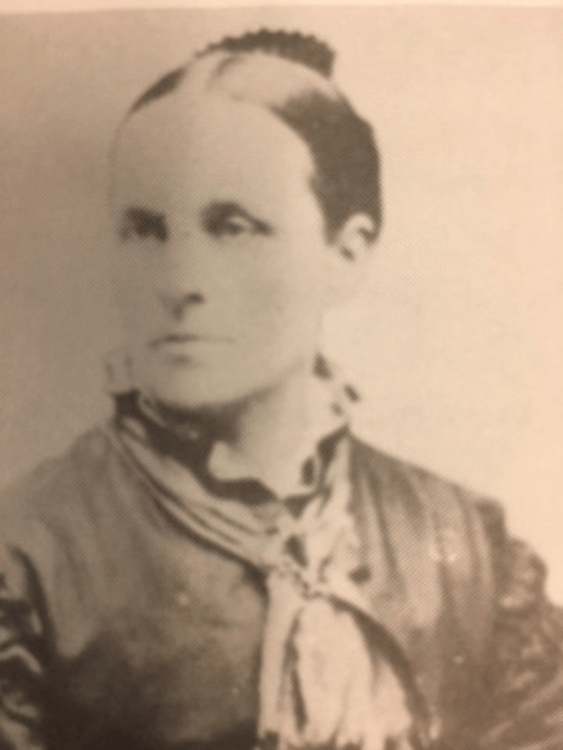

Image: The Kansas Room Files, Baldwin City Public Library