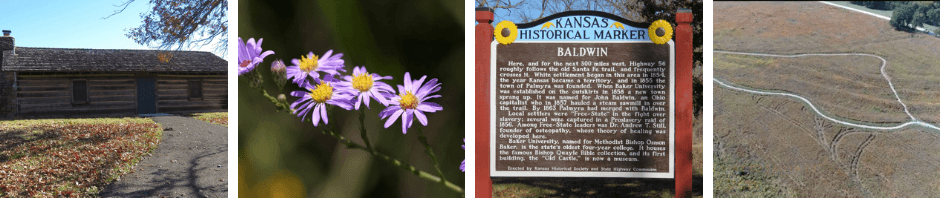
Last Chance to Visit Local Historic Site – Sunday Oct. 31!
Consider visiting this beautifully preserved, treasured, and interesting site.

^^^^^
Help Honor Our Veterans!
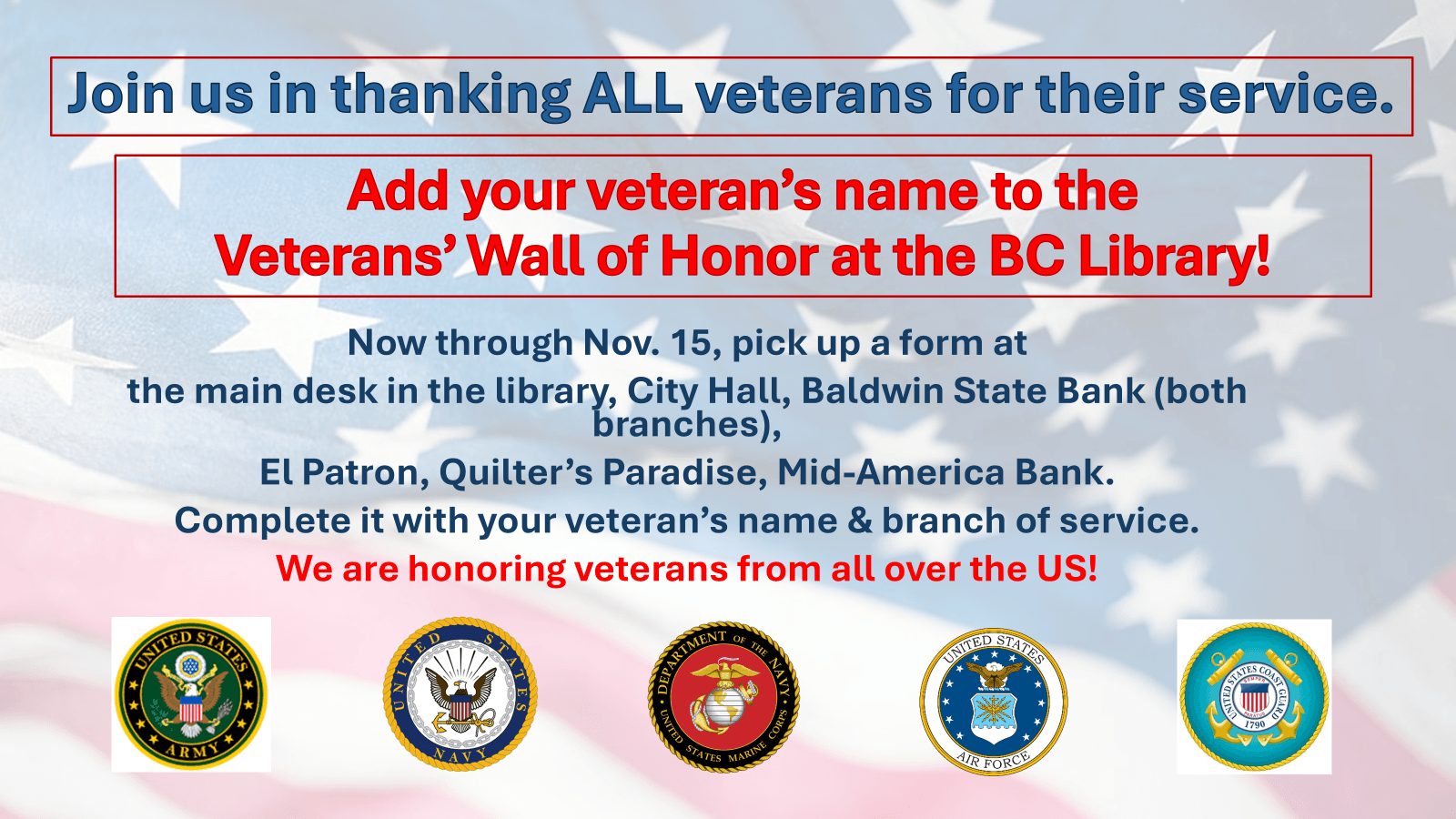
- Veterans can be from ANYWHERE – not just Baldwin.
- CURRENT service personnel are INCLUDED!
- Veterans from times of WAR AND PEACE and from ALL TIME PERIODS are included.
- The only info required for a veteran block is their name – branch of service would be nice too, but not required! Other info is optional.
^^^^^
“Our Local History” Event – Sat. Nov. 7

- Hear the history of the Baldwin area’s veterans groups.
- Learn the traditions practiced from the Civil War through today to honor our local veterans.
- Discover the three veteran memorials in Baldwin.
- Find out about current efforts to support our veterans.
- Enjoy a musical tribute to all members of the armed forces as we thank our veterans and current service members for their sacrifices and service.
^^^^^
“Our Local History” & America 250 Celebration on Display at Baldwin City Public Library!

Information about each of these women is presented in “The Spirit of Kansas Women” display. Further information, including biographies, can be found on this website by following this link America 250: “The Spirit of Kansas Women” Display
NEW!! The short biographies from the display have been added to each page!
- Kansas In the 1850s – description of KS life
- Bahnmaier, Carolyn Wezstein – Pioneer
- Bell, Anna Maria – Business Owner
- Brooks, Anna – Waitress, Maid, Ex-Slave
- Dillard, Mary Jane – Teacher
- Fish, Eudora – Shawnee Tribe Member
- Gill, Martha Cutter Kelley – Library Founder
- Hall, Olive Willey – First College Graduate
- Harvey, Rebecca Brooks – Midwife, Ex-Slave
- Hitchcock, Florence Mann – Early Pharmacist
- Leonard, Elizabeth Perkins – First Professor
- Lister, Mary Graham – Pioneer
- Lovejoy, Julia Hardy – News Reporter
- Magoffin, Susan Shelby – SF Trail Reporter
- Miller, Dr. Mary McQuiston – Early Doctor
- Nottingham, Roberta – Teacher
- Pendleton, Genevieve Lingard – Poet, Banker
- Prentiss, Annie Soule – Library Founder
- Robinson, Sara – Political Activist
- Simmons, Elmira Dodder – Business Owner
- Sullivan, Lucy Sweet – Early Mayor
- Taylor, Lucy Hobbs – First Dentist
- Weldon, Angeline – Civil War Army Nurse
^^^^^
Click this link to Join Us! (Membership)
********************************