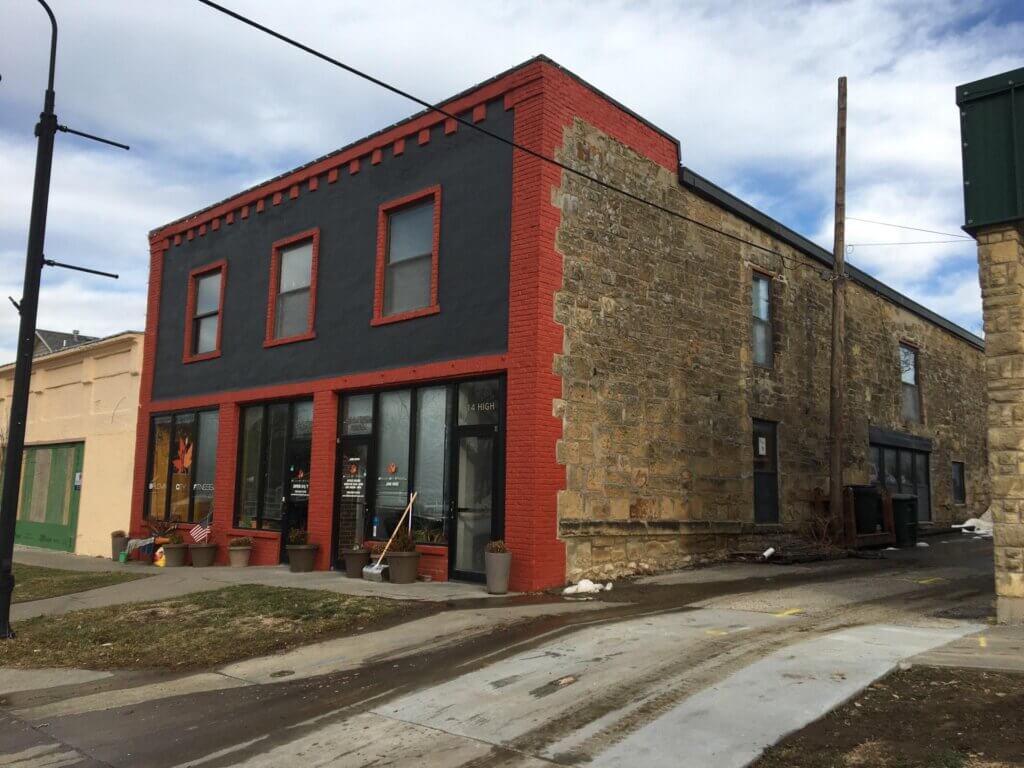
Currently: Baldwin Fitness Center
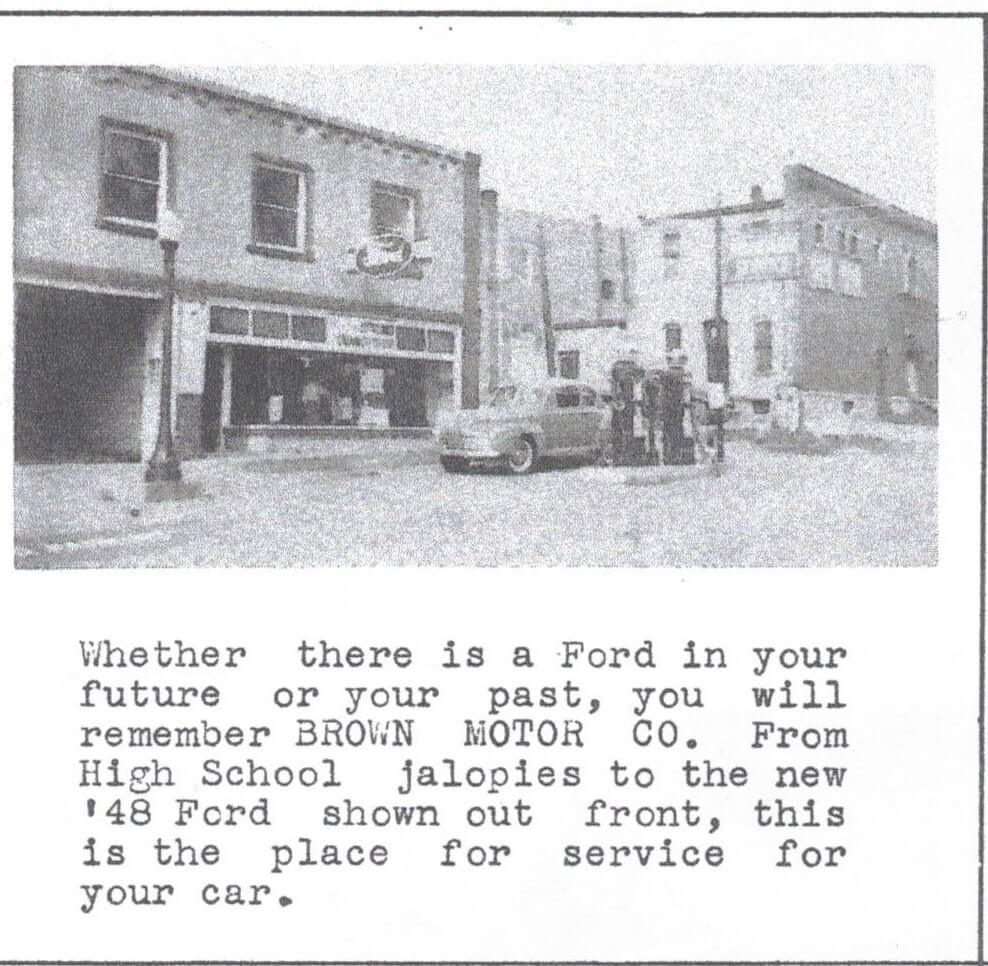
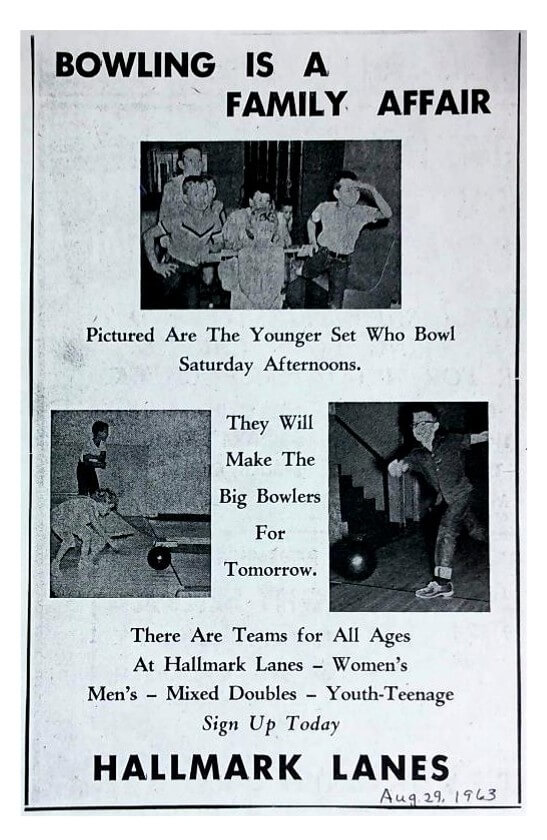
Historically a.k.a.: Stewart’s Livery Barn, Stewart’s Ford dealership, Smith-Williams Motor Company, Baldwin Motor Service, Brown Motor Company, possibly Beedle’s Motors, Brown Recreation Club, Hallmark Lanes bowling alley, Stephen’s Barbershop.

- Individual photos and full text of article is available below.
- First printed in Baldwin City Community News, March 17, 2022. Reprinted with permission.
*********************************
Photos

*********************************
Text of Article:
Treasures From The Kansas Room By Marta Jardon, Santa Fe Trail Historical Society – Baldwin City Community News, March 17, 2022.
Schoolchildren, Horses, Cars, and Bowling: The Story of 814 High St.
The two-story stone building at 814 High Street which currently houses the popular Baldwin Fitness Center has a long history. The building was built in the early 1900s, but the stones used for the building date back to the mid-1800s. The best view of these beautiful, historic stones is from the alley on the east side of the Fitness Center.
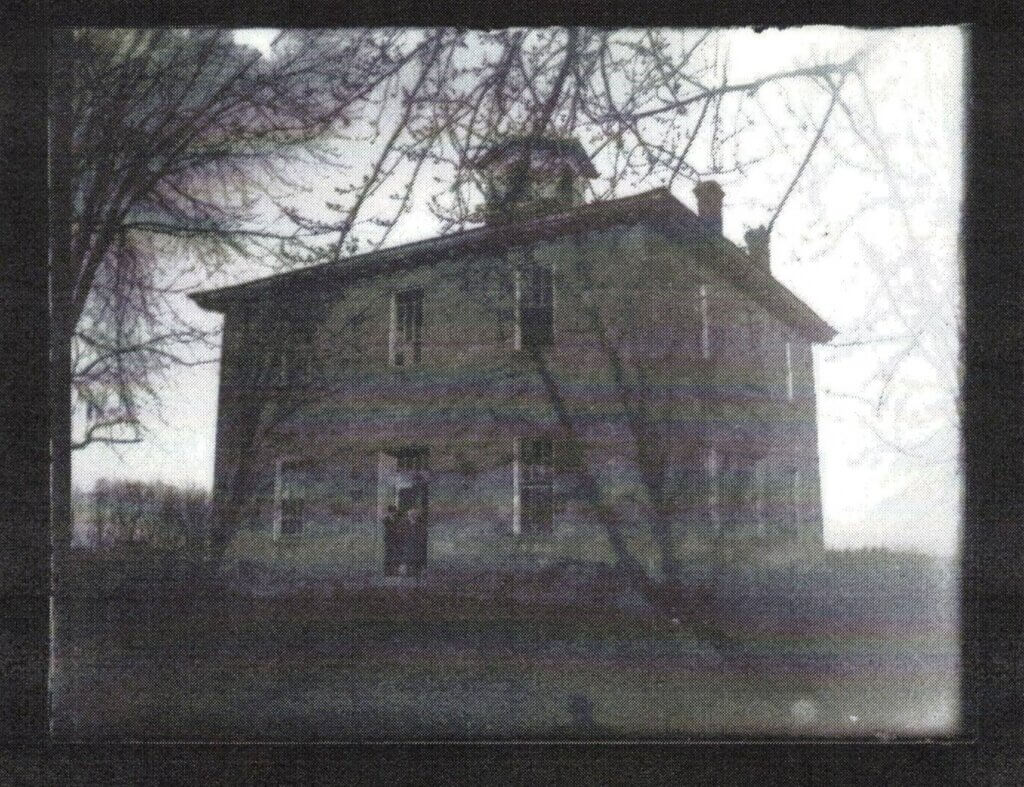
The stones used for the building came from the old Palmyra schoolhouse, which had been in operation from 1864 to 1888. The town of Palmyra existed just north of Highway 56. It was founded around 1856 but began many years earlier as a stop on the Santa Fe Trail. The town was instrumental in the formation of Baker University and the early days of Baldwin. As Baldwin City took shape and grew, the people and businesses of Palmyra gravitated south to that area. (The Palmyra Well can be visited at 402 Washington – Washington and Palmyra Lane).
The 814 High Street building appears to have been built around 1904 or 1905. On Sept. 23, 1904, The Baldwin Ledger reported that “Clyde Stewart is planning to build a 40 x 80 livery barn on lots adjoining his residence on High and 9th Streets.” The building appears on the 1905 Sanborn Fire Insurance Map of Baldwin. (These maps show all the buildings in a city as well as the location of fire equipment, wells, water pumps, gasoline, tin ceilings and other information so fire insurance companies could assess their liability in that area.)
An advertisement for “Stewart’s Livery Barn – Rigs for all and prices to suit; Clyde Stewart – The man with the smile that won’t come off” appears in the 1906 Baker University Orange Blossom yearbook. Ads for the livery barn continue in the 1909 and 1911 yearbooks promoting “attractive turnouts for afternoon and evening drives.” One can imagine the men and women dressed up in their finery going for a relaxing Sunday afternoon drive in a horse and buggy. Stewart’s rigs also carried people, baggage, and supplies into the town of Baldwin from the train depot, which was further west on High Street (in its current location).
Clyde Stewart and his parents came to Baldwin from Larned Kansas in 1883. They settled here thinking Baker would be a good place to get an education. Clyde’s mother was elected to the all-women city council in 1889. This group had the bridge built across the creek on High Street. The women of the town wanted the bridge because they were tired of getting their dresses and petticoats muddy when crossing the creek on the way to the train depot. Clyde himself became one of the first people in Kansas to get a mortician’s license in 1910. He also became the first Ford dealer in Douglas County, possibly as early as 1913, but more research is needed here. Also in 1913, he had the Zeta Chi fraternity house built on Ninth Street where the Lamb-Roberts Funeral Home is today.
Clyde’s daughter, Beulah Stewart, was an accomplished and respected citizen of Baldwin. She was a graduate of Baker University and earned a master’s degree from KU in 1927. She taught in the Baldwin schools. In 1934 she was appointed Postmaster of Baldwin by President Roosevelt. (In an interview, she said there was no such word as “Postmistress”.) She had the endorsement of the Democratic Central Committee and many influential men of the city. She was also the first woman to be president of the Kansas National Association of Postmasters.
Clyde Stewart had his Ford dealership in the 814 High Street building until the mid-1920’s. The dealership then had various owners. It became the Smith-Williams Motor Company in 1924 and added tractor mechanics and parts to its services. In 1933 it became Baldwin Motor Service with Leo Smith as full owner. He added the servicing of electrical motors and radios. By 1938, no new Ford cars had been available for three years due to the Depression. Leo sold the business to Ted Brown who renamed it the Brown Motor Company. Ted concentrated on repairing electrical appliance motors and radios. Soon the Depression passed, and new cars became available again. Marvin Jardon recalls that Willis Warner was a mechanic at Brown’s in the 1940s while also serving as the minister at Ives Chapel United Methodist Church in West Baldwin. In 1950, Brown sold the business to R.W. (Pat) Beedles who may have operated at this location for a year or two before moving to his long-time location on the northwest corner of 6th and High.
In February 1952, the Brown Recreation Club opened at 814 High. Ted Brown had started remodeling the building for this new endeavor in December of 1951. He planned for his son, Robert (Bob), to operate the business after Bob returned from military service. Unfortunately, Ted passed away before the opening of the business. The Recreation Club was open to both men and women. The walls and floors were redone and painted light green. A cream-colored ceiling was installed. The newspaper reported, “it is well-ventilated for summer and well-heated for winter.” The light fixtures sound very interesting. The newspaper described them as, “The arms holding lights are baseball bats and the light shades, round ones, are painted to make them appear like baseballs.” Games available included: pool, billiards (no pockets), shuffleboard, pinball bowling, dominoes, and card tables. Past visitors to the Recreation Club, John Jackson and Marvin Jardon, explained pinball bowling. It involved a ball with no holes which was smaller and lighter than a bowling ball. It was about 2 inches bigger than a softball. These two men recall spending many enjoyable hours at the Brown’s place.
After the Brown Recreation Club closed, a modern bowling alley opened in its place. The bowling alley operated for many years in the east side of the building. Stephen’s Barbershop occupied the west side of the building.
The Kansas Room (located in the Baldwin City Public Library) could use your help in collecting the histories of the businesses that called 814 High Street home. The bowling alley and other businesses in this building played huge roles in the lives of those from Baldwin City. They hold wonderful memories for so many. The Kansas Room continues to collect and preserve the valuable history of the Baldwin area so future generations can learn about the town’s rich past. We encourage those with clippings, photos, or memorabilia of these businesses to contact Librarian Shara Stephenson at the library so items can be copied or scanned and added to the history files.
—-
Looking for Baldwin or local history? Or want to contribute to it? Come to The Kansas Room!
The Santa Fe Trail Historical Society of Douglas County has been preserving and promoting the history of the Baldwin, Vinland, and Southern Douglas County area in addition to the Trail since 1967. Visit the website at www.santafetraildouglas.org.
–Updated 1/2025