Genevieve Lingard Pendleton –Poet, Banker, Women’s Leader & Advocate (1878-1934); Baldwin, Franklin County
By Jane Lister Taul, 2026
In Brief:
Genevieve Lingard Pendleton was a poet, a banker, and a leader of the Daughters of the American Revolution (D.A.R.). She was an advocate for patriotic education and citizenship as well as women’s issues.
Genevieve Lingard was born on Sept. 7, 1878, in Kansas. She lived in Princeton, Baldwinand Richmond and attended public schools before graduating from Baker University. She held multiple positions in the D.A.R. As Chairman and National Vice Chairman of the Western division of the National Defense Through Patriotic EducationCommittee, she carriedon her work through five Midwestern states. Genevieve’s results were so outstanding that she was invited to speak at the Continental Congress of the N.S.D.A.R. in Washington D.C.
Genevieve wrote poetry, often published in newspapers, that focused on issues common to women’s daily lives. Her poem, “Baby’s Chair,” discussed the terrible experience of losing a child. The difficult experience of a husband announcing he was givingup farming was covered in “One of Many”.
For many years, Genevieve was a banker in Kansas City, but due to ill health, she retired from banking and engaged in the registered Hereford business in rural Franklin County. She continued her work on the DAR National Defense Committee, making many addresses about patriotic education and education in citizenship over the radio. Genevieve Lingard Pendleton left a lasting impression on many through her poetry, advocacy, leadership, and vocation.
More Information:
Genevieve Lingard Pendleton was a poet, a banker, and a leader of the Daughters of the American Revolution (D.A.R.). She was an advocate for patriotic education and citizenship as well as women’s issues.
Genevieve Lingard was born in Kansas on Sept. 7, 1878, the daughter of Amos Lister and Eliza Jane Baker Lingard.[1] She and her family, including her five siblings, lived in Princeton, Baldwin, and Richmond and attended public schools. Genevieve graduated from Baker University, where she was affiliated with the Alpha Chi Omega sorority.
Genevieve was the Chapter Regent of the General Edward Hand Chapter of the Daughters of the American Revolution from 1919 to 1929, then State Vice Regent from 1929 to 1933. As Chairman and National Vice Chairman of the Western division of the National Defense Through Patriotic Education Committee, she carried on her work through five states: Kansas, North and South Dakota, Nebraska, and Colorado. Genevieve’s results were so outstanding that she was invited to speak at the Continental Congress of the N.S.D.A.R. in Washington D.C. She also served as State Regent from 1933 to 1934.
Genevieve wrote poetry, often published in newspapers, that focused on issues common to women’s daily lives. Her poem, “Baby’s Chair,” described the terrible experience of losing a child. The difficult experience of a husband announcing he was giving up farming was addressed in “One of Many.”
Genevieve was active in various women’s clubs such as the Kansas Women’s Legislative League and the local M.P.M. Club (a women’s club that met on Monday afternoons). She gave presentations to the groups such as the “Business of Being A Woman”.
For many years, Genevieve was a banker in Kansas City, but due to ill health she retired from banking and became engaged in the registered Hereford business in rural Franklin County. She continued her work on the D.A.R. National Defense Committee. Her hobbies and chief interests continued to be patriotic education and education in citizenship, and she made many addresses over the radio on these subjects.
Genevieve and her husband Edwin Poston Pendleton had one daughter, Mrs. Frank Hodges, Jr., who also served as her mother’s personal page at the National D.A.R. board meetings.
Genevieve passed away 1934 and rests in Highland Cemetery in Franklin County.
_____________________________
[1] findagrave.com/memorial/53146121/genevieve-pendleton
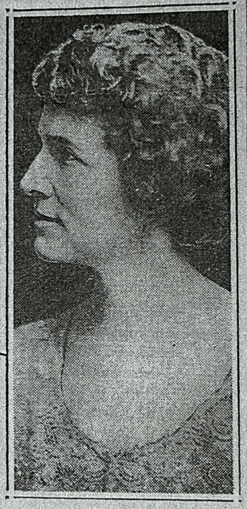

Image: Kansas City Star Times Nov. 27, 1934
Click to return to: America 250: “The Spirit of Kansas Women” Display